Exploring the Future of Peacemaking: Peacegame at the Geneva Incubation Space


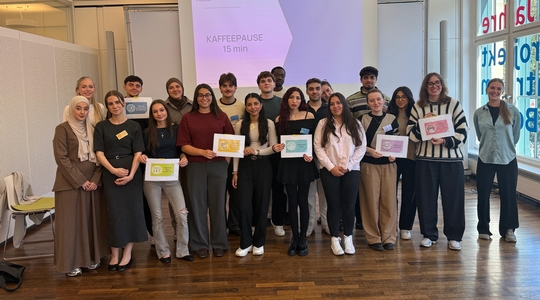
As part of the immersive learning block on Day 1, we facilitated an AI-supported Peacegame focused on Syria, positioning it as a test case for reimagining post-conflict peacebuilding. Participants assumed diverse stakeholder perspectives and engaged with a complex scenario centered on reconstruction, refugee returns, and transitional governance. The game reacted dynamically to their decisions, revealing the trade-offs and long-term consequences of proposed strategies. Our AI Advisor, built on a curated database, provided real-time insights into the quality and trajectory of peace options.


Framed around three reform pillars -Institutions & Integration, Financing for Peace, and Innovation & PeaceTech- the simulation challenged conventional thinking and encouraged cross-sector collaboration. We were particularly encouraged by the discussions and synthesis on Day 2. One message came through clearly: this system must be reconfigured, not tweaked, but fundamentally rebuilt. While the peace-building field has long been good at identifying its own limitations, it often struggles to implement change. In Geneva, however, there was a broad consensus on the need for a bold reset: integrating new actors, technologies, and financing mechanisms, while putting local legitimacy and leadership at the center. The question was not whether change is needed, but how to make it real. The insights from the Peacegame directly fed into the Policy Innovation Sprints on Day 2, helping shape forward-looking recommendations for international policy discussions and broader reform efforts.
We’re grateful to the Principles for Peace Foundation for convening this timely and experimental space — and for recognizing the role that simulations and AI can play in unlocking more adaptive, inclusive, and context-driven peace processes.