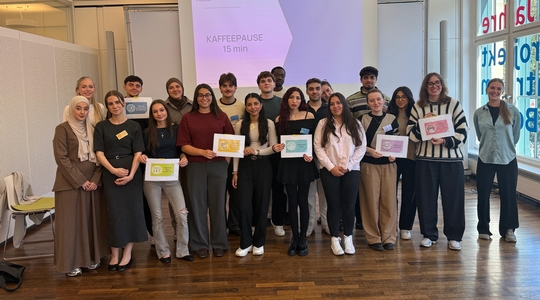
On October 6, a group of 12 students, academics and civil servants participated in the pilot simulation game “Tools for Integrity-Based Decision-Making”. The main objective of the game was to provide participants with tools to analyze the local governance context, identify areas of highest risk to integrity and accountability, and assess the incentives and conditions that enable integrity-based decision-making.
The simulation models the interactions between different public and private actors within the framework of a procurement process carried out by a local government. Each actor, bounded by a specific set of functions, responsibilities, and interests, engages, negotiates, and reaches agreements based on the incentives generated by the institutional context. The outcome of these interactions, as well as the decisions made by each actor, determine the result of the simulation.
During the simulation, the participants experimented the network of incentives and ethical dilemmas that shape interactions among various actors involved in a procurement process and recreated the complex dynamics at the core of integrity-sensitive decision-making processes.
This pilot implementation represents the first collaboration between CRISP and Universidad Autonoma de Bucaramanga (UNAB) and served as a test-run for the newly developed simulation game Digital Tools for Current Anti-Corruption Challenges and Integrity-Based Decision-Making. Both the European Research Center for Anticorruption and State-Building (ERCAS) and the American journalist John Dell’Osso contributed to the development of the simulation materials.