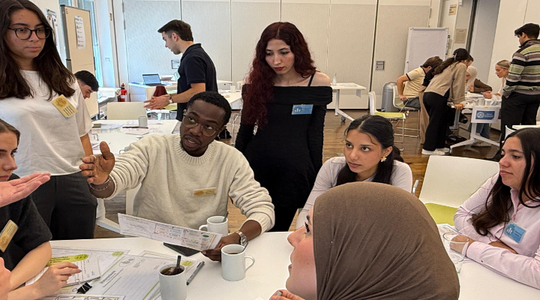
Simulation game
Aridora peace talks
Target-Group
Pupils aged between 14 and 18. All types of school
Topics
International Relations, Conflict Transformation, Democracy & Participation
Level
Beginner, Experienced
Duration
4-6 hours
Number of participants
< 12, 12-20, 20-30
Format
Onsite
Languages
English, German
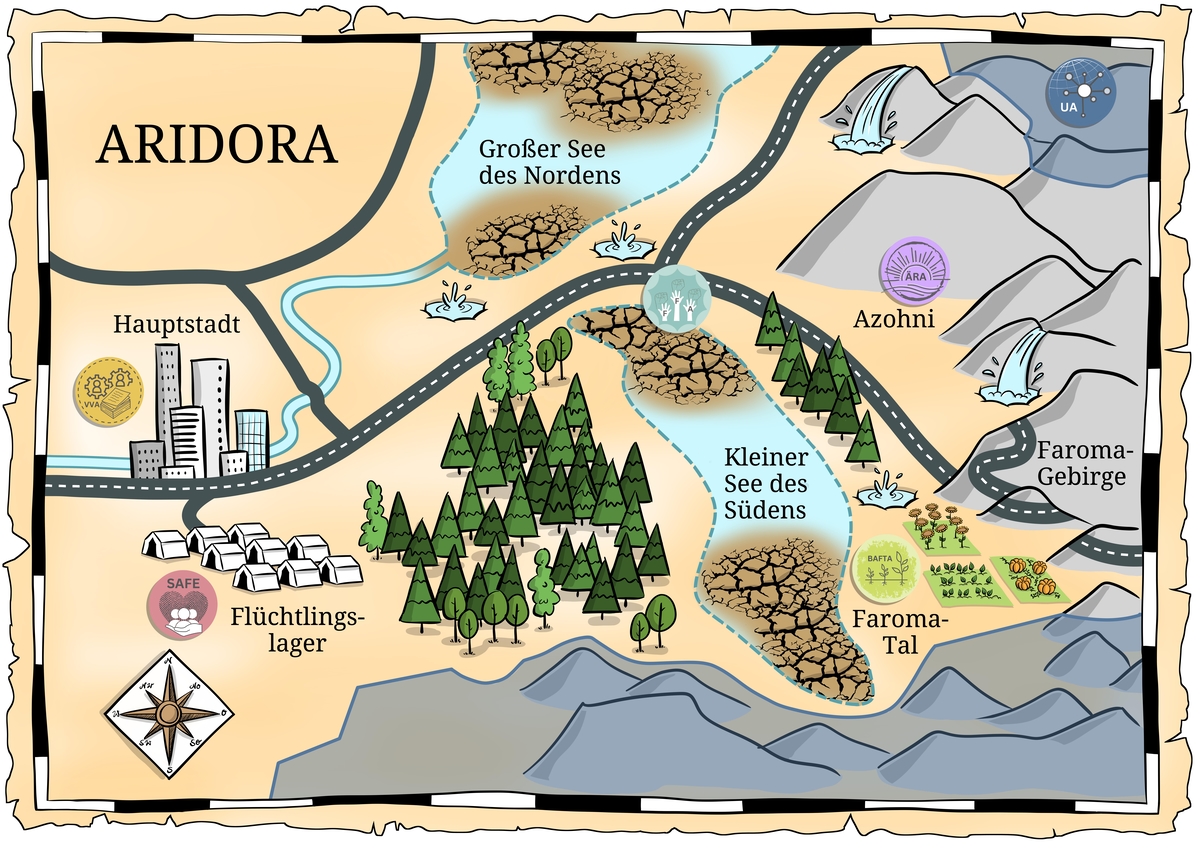
The simulation game recreates an international peace conference aimed at negotiating a sustainable peace treaty in Aridora, a country ravaged by civil war. Participants take on the roles of various stakeholders, such as indigenous communities or rebel groups, and must develop creative solutions during their negotiations that pave the way for the adoption of a sustainable peace treaty in Geneva.
Scenario & Procedure
In Aridora, the escalation of resource scarcity and political neglect has led to a civil war between the government and the armed opposition. To resolve the conflict in a sustainable manner, civil society is developing concrete proposals to tackle the root causes of the conflict in the run-up to an international peace summit.
The aim of the game is to achieve a minimum number of peace stars. These stars symbolise the quality and support for the proposals developed. Each group of actors works on its own proposals, which must be supported by ‘dots’ (support points) from other actors. Proposals that receive at least four dots are considered accepted and earn the actors peace stars.
Objectives
The aim of the simulation exercise is to work together at the Aridora Recovery Conference (ARC) to develop proposals that will serve as the basis for the upcoming peace summit in Geneva.
Learning Goals
- Identification of different types of negotiation, actors and peace concepts
- An understanding of the complexity and dilemmas of peace processes
- Developing critical thinking and creative win-win solutions by navigating conflicting interests
- Strengthening communication, empathy and teamwork