Democratic systems must evolve in line with the needs of citizens. Citizen participation, particularly at local level, is a way of involving citizens more closely in political decision-making. Especially in societies where political participation is low, greater citizen participation is a means of engaging citizens with politics and lending greater legitimacy to decisions.
Scenario & Procedure
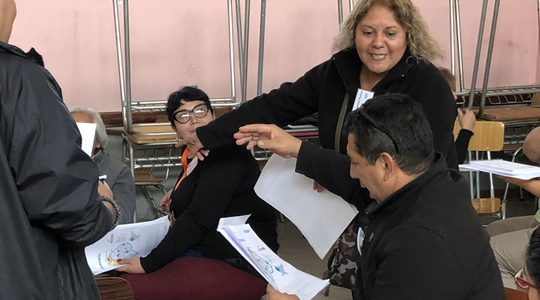
Following the publication of Chile-Leaks, the mayor of Los Álamos, Alberto Cienfuegos, has gone on holiday and will not be returning. Prior to this, he had, together with the Municipal Council, approved a Community Development Plan for the municipality of Los Álamos. However, some residents of Los Álamos believe the plan leaves much to be desired. Consequently, a coalition has formed within the COSOC that aims to halt the implementation of the Community Development Plan through a Community Plebiscite. In addition, they wish to contribute their own ideas and play an active role in revising the Community Development Plan. The simulation game will determine whether the Community Referendum will be successful. Furthermore, the participants will utilise other mechanisms of citizen participation in an attempt to play a direct role in the development of their community.
Objectives
Participants not only learn about existing local mechanisms for public participation, but also attempt to apply them as part of the simulation exercise. In doing so, they become more aware of how they can get involved in political decision-making, whilst gaining practical knowledge of the advantages and disadvantages of using the various mechanisms. During the debriefing, participants identify real-life issues in their local community and attempt to resolve them using one of the mechanisms.
Learning Goals
- A better understanding of local decision-making in Chile
- Understanding coalition-building processes
- Distinguishing between value-based and pragmatic decisions in politics
- Overcoming disengagement from politics by understanding the importance of one’s own vote