Empowering Young Minds: CRISP’s Coalition-Building Simulation at the JuniorAkademie Humboldt auf Scharfenberg


As part of the Postcode funding, we were delighted to be invited by the JuniorAkademie “Humboldt auf Scharfenberg” to facilitate our coalition-building simulation game with students in grades 7-10. The JuniorAkademie Berlin "Humboldt auf Scharfenberg" is an initiative by the state of Berlin aimed at nurturing exceptionally talented and highly motivated students. During their summer holidays, students had the opportunity to select a 5-day course that extended beyond the standard curriculum, offering them an enriching educational experience.


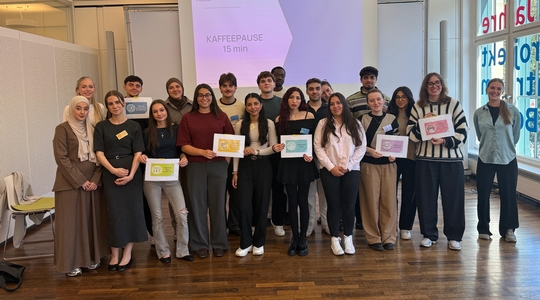
We were invited to integrate our simulation game, Kosi, into the course titled "Trump, Orbán, Höcke & Co. – Populism: A Threat to Society and Democracy?", which was chosen by 12 students. Throughout the Simulation Game, students engaged in lively discussions on critical current issues, such as debates surrounding the “Bürgergeld”, defense policies, and the supply of weapons to Ukraine. In this context, they assumed the roles of fictitious politicians with differing interests and agendas, tasked with forming a coalition. This involved drafting a coalition agreement and appointing ministers, all while navigating the complexities of political negotiation.
The simulation provided an interactive environment where students not only deepened their understanding of these pressing topics but also developed critical skills in democratic decision-making and coalition-building. At the end of the exercise, the results were thoroughly discussed, with the outcomes integrated into a broader debate about the functioning of democracy itself. The experience clearly showcased how such courses, going beyond the traditional classroom setting, offer students a deeper, more hands-on approach to understanding politics and democracy.
extra pictures