Symposium: Talking to each other! But how?


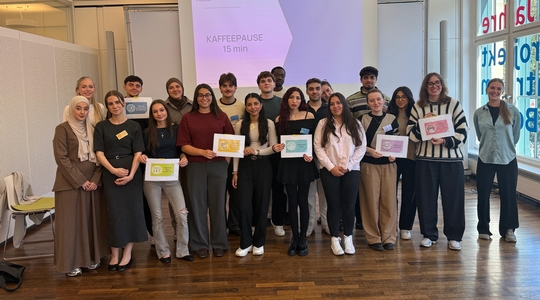
On 5 December 2025, as part of the German-Ukrainian Dialogue project, we held our symposium entitled "Talking to each other! But how?" – with over 70 participants and many interesting ideas from dialogue practice.
The focus was on how we can remain capable of dialogue in times of social media, disinformation and political escalation without becoming naive. In his keynote speech, Dr Eugen Pissarskoi outlined a "utopia of constructive debate" and at the same time highlighted the psychological, technological and political factors that make constructive debate difficult – and what can be done to counteract them.
Another highlight was the conversation with Gilda Sahebi about divisive narratives and the dynamics that reinforce polarisation – and why, on many issues, we often have more in common than appears in public discourse. Together, we were able to talk about her new book, Verbinden statt Spalten (Connecting Instead of Dividing).

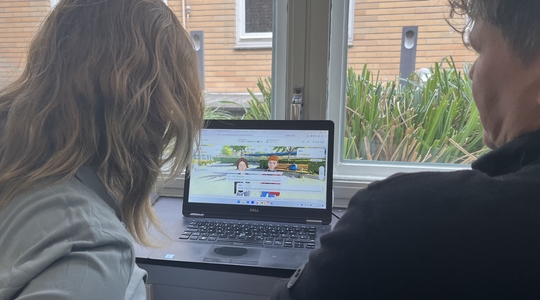
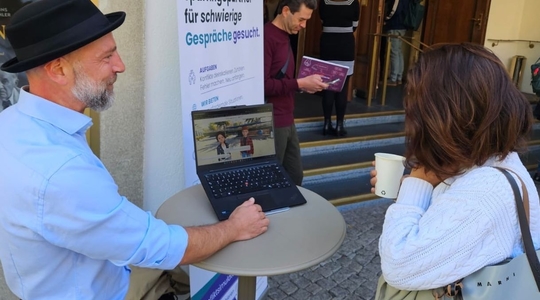
In the afternoon, participants were able to explore in depth how dialogue can succeed in particularly challenging contexts in three interactive workshops: in everyday conversations with people who think differently, in a school environment on topics such as the Middle East, white power and queer feminism, and in a VR conflict simulation in which conflict management skills were tested and reflected upon in practice.
The concluding panel discussion brought together different perspectives on dialogue, the limits of dialogue and the question "Who benefits from polarisation? Who do I direct my anger at? And who am I actually talking to?" with Dr Larissa Knöchelmann, Dr Eugen Pissarskoi, Gilda Sahebi and Kateryna Pavlova.
The key outcomes we take away are: people are less polarised on many issues than is often assumed – at the same time, we differ significantly in how we deal with contentious topics.
Polarisation and divisive narratives serve authoritarian forces in particular. And: dialogue remains possible, but it is a conscious decision to engage in a potentially strenuous conversation in which boundaries are constantly being renegotiated. It is precisely this simultaneity – the ability to engage in dialogue and set clear boundaries – that must be practised, starting with self-reflection: where are my trigger points, and how do I remain capable of acting despite my emotions?